
Let’s Stop Lying to Kids About Gravity
Einstein Proven Right Again!
How many times have you seen a headline like that? In the past year alone, it’s appeared in the news dozens of times. But if Einstein was right, then who was wrong?
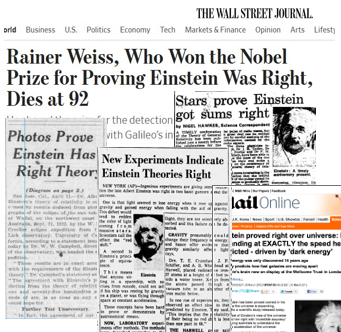
A smattering of the countless Einstein-right-again headlines.
The answer: Isaac Newton was wrong.
The law of universal gravitation, which Newton conjured up as he was isolating to avoid the Great Plague of London, is based on a fallacy that made Newton himself uncomfortable.
The false premise is that objects attract each other with a force that acts instantaneously over the distance between them. We now know from general relativity that what feels like a force of gravity isn’t due to attraction at all.
According to Einstein’s theory, the force we feel as gravity pulling us down is actually the Earth pushing us up. The surface is shoving us off the paths we would take through space and time if the ground weren’t there to get in the way.
And yet, we choose to teach children Newton’s fiction rather than Einstein’s truth. It’s a fib that we must later admit to, if kids are to understand the universe they live in today.
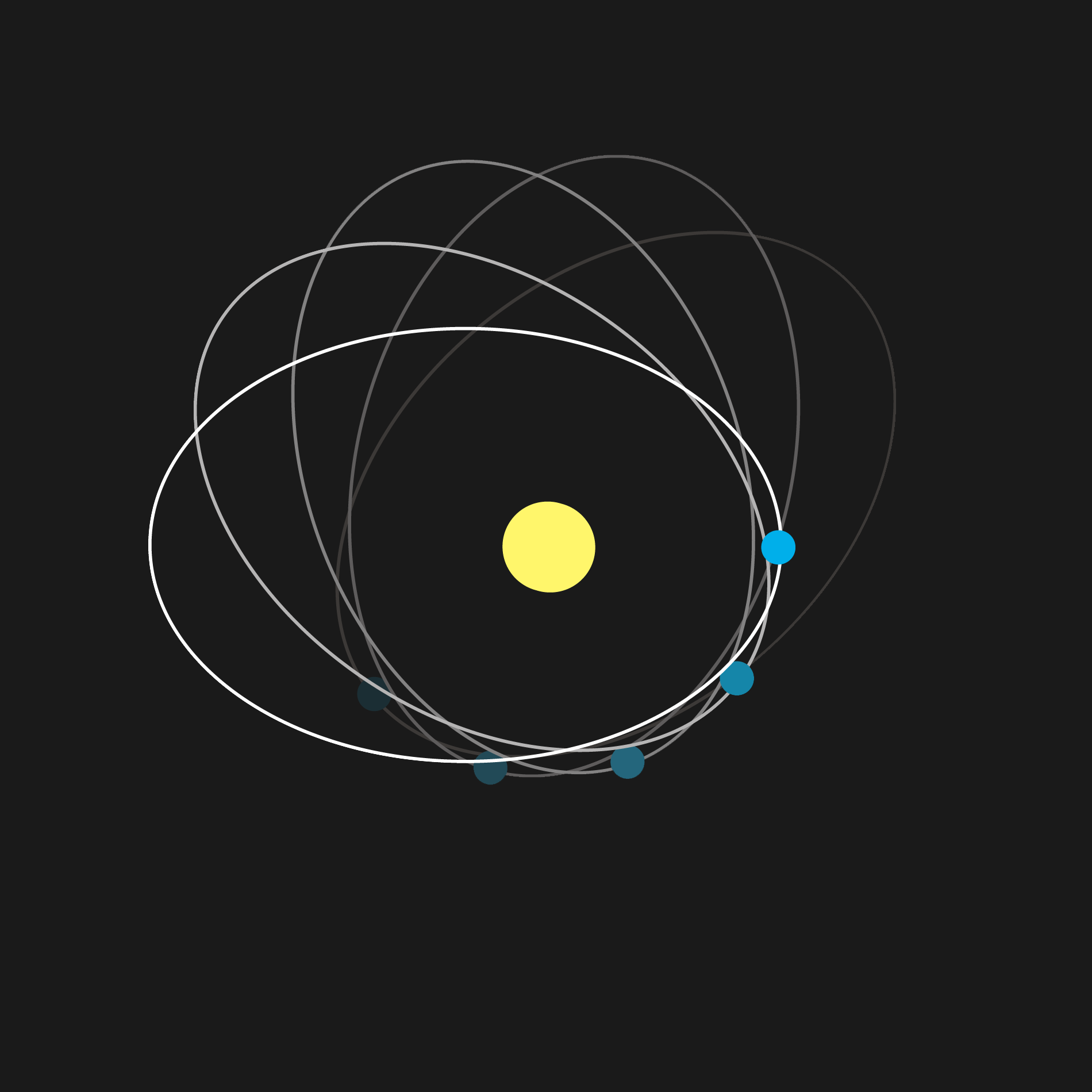
The orbit of Mercury swings around the Sun in a way relativity explains, but Newton’s gravity can’t.
At low speeds and modest gravity, it doesn’t matter much whether you look to Newton’s law or Einstein’s relativity. In Newton’s time, high-speed travel meant mounting a swift horse, and the most precise clocks were accurate to seconds over the course of days. For the most part, the old law of gravity worked just fine to describe the path of an apple falling from a tree branch, the arc of a tossed pebble, and the orbit of the Moon.
These days, most of us couldn’t make a trip across town if we were stuck with Newton’s law of gravity — the GPS systems that guide us would be hopelessly useless if they didn’t rely on relativity to precisely measure time and calculate distances. Einstein’s theory is crucial for understanding the expanding universe, the engine that drives the Sun, the existence of black holes, and countless other phenomena that have important impacts on science, technology, and our daily lives.
A common defense for propagating Newton’s fiction in school is that his law of gravity is a good approximation of relativity.
It’s a rotten excuse.
A fictional force of attraction isn’t an approximation of a theory that involves no attraction at all.
It’s like saying the myth of the stork delivering babies is an approximation of conception and childbirth. Either way, an infant results. One explanation undermines a curious child’s intelligence and gets them to stop asking uncomfortable questions; the other empowers them to understand reality.
I know, I know — relativity is hard. Kids in school don’t have the mathematical tools to tackle relativity at the level that Einstein used it. The problem with that thinking is that an elementary approximation of gravity leads to the same equations regardless of whether you start with Newton’s fiction or Einstein’s fact.
When you stand on a scale, for example, the numbers reveal the force between you and the Earth. Newton’s law says the force is due to the planet’s mass pulling you down, while relativity says it’s the planet pushing you up. The approximate equation doesn’t change. It’s the underlying reasoning that does.

Scales — measuring relativity’s effects for millennia.
Either explanation will let a student figure out how long it takes a ball to fall to the ground from a few meters up. But only one of them plants a seed that will grow into a deeper understanding of the universe or the knowledge it takes to build working GPS systems.
Things like planetary orbits are more complicated. But at least one way to address relativity, sometimes called the river model (or the flowing space interpretation), can be cast in ways that are conceptually and mathematically no harder than Newton’s gravity.
Few children will grow up to be astrophysicists and engineers. But all of them will eventually see the many, many Einstein Proven Right Again! headlines.
Wouldn’t it be better if those headlines confirm a truth they learn in school, instead of exploding an age-old fib?
It’s time to rewrite the textbooks. Honor Newton in history tomes, and put Einstein in science books.
***
Sign up below for updates to this blog, or to just get in touch to talk about gravity!
